Our Educational Materials
Free to use! Please credit Health EDU in your presentation.
Inclusive, Trauma-Informed, and Patient-Centered Approaches to OBGYN Care
Learning Objectives
Recognize barriers that prevent individuals from accessing preventative OBGYN care, including historical, structural, social, cultural, and financial factors.
Describe the importance of inclusive, patient-centered, and trauma-informed care in improving patient trust.
Define the principles of trauma-informed care and explain their importance in OBGYN practice.
Discuss recent innovations in OBGYN care, including evidence-based pain management, minimally invasive procedures, and telehealth.
MD/DO/PA specific
Apply patient-centered and trauma-informed communication strategies when discussing sensitive gynecologic concerns and procedures.
Identify when a patient’s symptoms or preventive needs warrant OBGYN referral or further evaluation.


Creator Credits
Lucy Kelliher, PA1, Stanford University School of Medicine
Megan Sparrow, MS1, Stanford University School of Medicine
Ishi Shukla, MS1, Stanford University School of Medicine
Olivia Peony, Postbacc, Stanford University School of Medicine
Isabella Dang, Undergraduate, Stanford University
Contraception 101 and Destigmatizing Emergency Contraception
Learning Objectives
Understand the different types of available birth control and their benefits and limitations.
Recognize the barriers and stigma that affect access to birth control and emergency contraception.
Understand a reproductive-justice-oriented framework for contraceptive counseling across multiple contexts including as a patient, advocate, or healthcare provider.
MD/DO/PA specific
Understand how to deliver patient-centered contraceptive counseling that is nonjudgmental and addresses common misconceptions and access issues.
Understand how to advocate for emergency contraception access in clinical spaces.


Creator Credits
Saumya Sao, Stanford University School of Medicine
Shuwen Zhang, Stanford University
Aakriti Neopaney, Stanford University School of Medicine
Olivia Peony, Stanford University School of Medicine
Isabella Dang, Stanford University
Breast Cancer Prevention
Learning Objectives
Identify major breast cancer risk factors and common signs and symptoms.
Explain the importance of breast cancer screening and follow-up and identify barriers that may delay care.
Use respectful, nonjudgmental, and autonomy-supportive communication when discussing breast cancer screening and follow-up.
MD/DO/PA specific
Identify appropriate next steps for patients with concerning breast symptoms or abnormal screening findings.
Apply patient risk factors, medical history, and social circumstances when developing screening and follow-up recommendations.

Creator Credits
Ashley Cronin, PA2, Stanford University School of Medicine
Beryl Deyoe, PA2, Stanford University School of Medicine
Devika Patel, PA2, Stanford University School of Medicine
Saumya Sao, MS2, Stanford University School of Medicine
Olivia Peony, Postbacc, Stanford University School of Medicine
Isabella Dang, Undergraduate, Stanford University
PMOS, Endometriosis, Adenomyosis & Advocating for Patients
Learning Objectives
Describe STI/HIV transmission and prevention strategies, including the role of HPV in gynecologic cancers and the use of HPV vaccination, PrEP, PEP, and doxy-PEP.
Identify structural and individual barriers that contribute to disparities and delays in STI/HIV testing and gynecologic cancer detection.
Use culturally aware, inclusive, and non-stigmatizing communication when discussing sexual and gynecologic health.
MD/DO/PA specific
Apply current recommendations for STI screening, HIV prevention, HPV vaccination, and cervical cancer screening.
Practice taking a comprehensive, nonjudgmental sexual history and using risk assessment to guide screening and prevention counseling.


Creator Credits
Lucy Kelliher, PA1, Stanford University School of Medicine
Inika Mehra, PCOS Alliance
Saumya Sao, MS2, Stanford University School of Medicine
Megan Sparrow, MS1, Stanford University School of Medicine
Ishi Shukla, MS1, Stanford University School of Medicine
Olivia Peony, Postbacc, Stanford University School of Medicine
Isabella Dang, Undergraduate, Stanford University
Gynecological Care and STI Prevention
Learning Objectives
Describe the epidemiology, disparities, and systemic manifestations of PMOS, endometriosis, and adenomyosis.
Recognize how stigma and medical dismissal contribute to misdiagnosis and underdiagnosis of these conditions.
Practice reflective listening and validating patient concerns when discussing symptoms and diagnostic uncertainty.
MD/DO/PA specific
Recognize common clinical presentations of endometriosis and adenomyosis and identify when further evaluation is warranted.
Use non-dismissive language when discussing symptoms.


Creator Credits
Lucy Kelliher, PA1, Stanford University School of Medicine
Megan Sparrow, MS1, Stanford University School of Medicine
Ishi Shukla, MS1, Stanford University School of Medicine
Olivia Peony, Postbacc, Stanford University School of Medicine
Isabella Dang, Undergraduate, Stanford University
Support and Advocacy for Undocumented Patients
How can we support undocumented children and families and help build resilience?
What is the impacts of ICE on healthcare?
How can you respond to ICE in clinical settings?


Creator Credits
Margarita Ramirez Silva, MS5, Stanford University School of Medicine
Lucy Kelliher, PA1, Stanford University School of Medicine
Megan Sparrow, MS1, Stanford University School of Medicine
Ishi Shukla, MS1, Stanford University School of Medicine
Ahana Narayanan, MS in CHPR, Stanford University School of Medicine
Yaneth Perez-Rodriguez, Postbacc, Stanford University School of Medicine
Saumya Sao, MS2, Stanford University School of Medicine
Period Poverty Workshop
What is period poverty?
How does period stigma affect menstruators across the world?



Creator Credits
Saumya Sao, MS2, Stanford University School of Medicine
PERIOD.org
External Resource
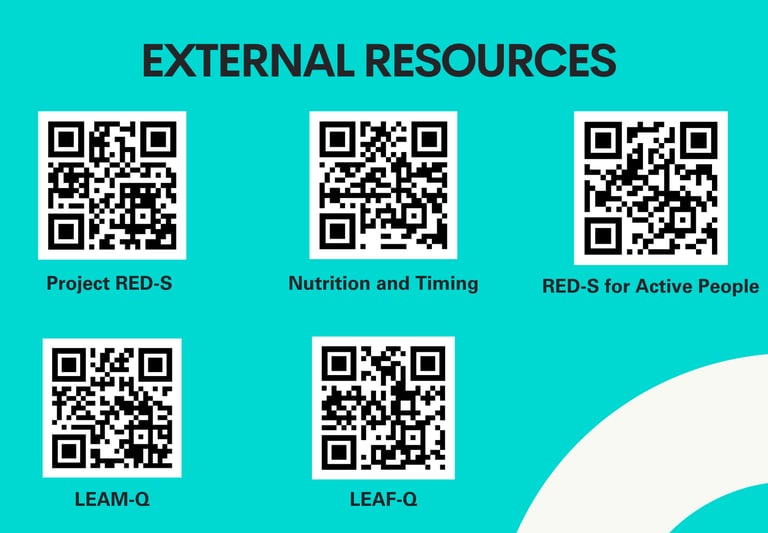
RED-S Workshop
What is RED-S (Relative Energy Deficiency Syndrome)? Why is it so underdiagnosed? What is its significance to reproductive health?
How does RED-S impact individuals?
How can I screen for RED-S in clinical practice?


Presentation slides for preclinical students - free to use!
A Brief Practical Guide for you to use in Clinical Practice
Creator Credits
Mary Cain, MS2, Stanford University School of Medicine
Lucy Kelliher, PA1, Stanford University School of Medicine
Saumya Sao, MS2, Stanford University School of Medicine
Megan Sparrow, MS1, Stanford University School of Medicine
Ishu Shukla, MS1, Stanford University School of Medicine
Nikki Torres, PA2, Stanford University School of Medicine
Health EDU Curriculum © 2020 by Saumya Sao is licensed under Creative Commons Attribution-NonCommercial-ShareAlike 4.0 International